
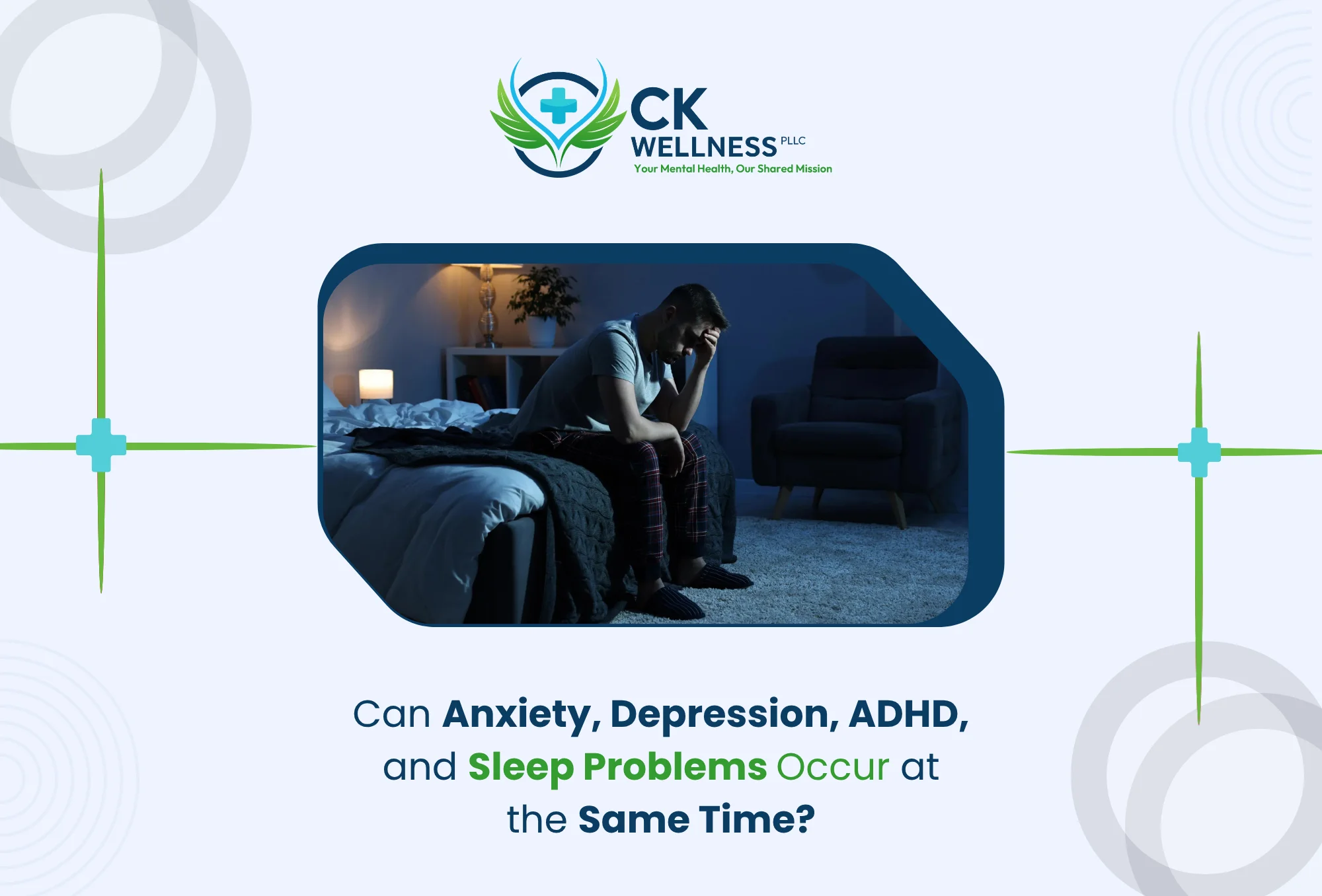
Life can feel very heavy sometimes. You might wake up tired even after a full night in bed. Your mind might race with worries all day long. You might feel sad for no clear reason. Even focusing on simple tasks might feel impossible.
Many people feel this way.
So, here is a big question: Can anxiety, depression, ADHD and sleep problems all happen at the same time?
Let’s talk about it.
Understanding Each Condition
Let us look at each one clearly.
Anxiety is chronic worry or fear. Your heart might beat fast. Your palms may sweat. You may worry about something horrible happening even while everything is great.
Depression goes beyond sadness; it is a long-lasting, heavy feeling. You may lose interest in old hobbies. You may always be exhausted. Maybe you feel empty or hopeless.
ADHD (Attention-Deficit/Hyperactivity Disorder) makes it hard to pay attention. You may feel restless. It can also hinder organization and work completion.
Sleep issues include trouble falling or staying asleep. Nighttime waking may be frequent. Daytime sleepiness is possible. Unrest can worsen everything.
CK Wellness, PLLC provides personalized psychiatric care for conditions including anxiety, depression, ADHD and sleep disorders, with treatment plans based on each person’s needs.
Can Anxiety, Depression, ADHD and Sleep Problems Happen at the Same Time?
Yes. They really can.
Many people have all of these feelings together. It can be very confusing. But it happens a lot.
If more than one problem occurs, doctors use the word “comorbidity.” It’s a big word, but it simply means “more than one thing at the same time.
Why Do They Happen Together?
These four problems are connected in many ways. The parts of the brain that control mood, attention and sleep are all linked. When one moves in, the others often follow.
Anxiety and sleep problems go hand in hand. Worrying keeps your brain occupied. It resists nighttime shutdown. While in bed, you think about the day. Your thoughts turn to tomorrow. Sleep is far off.
Depression and sleep problems are also closely linked. People with depression often sleep too much or too little. Some cannot fall asleep at all. Others wake up very early and cannot go back to sleep. Poor sleep can make depression worse. And depression can make sleep worse. It becomes a hard cycle to break.
ADHD and sleep problems have a special connection. People with ADHD often have busy minds at night. This is called hyperfocus. When the world gets quiet, the brain gets louder. You might start thinking about many things at once. Hours pass and you are still awake.
Anxiety and ADHD also overlap. The worry and fear of anxiety can make it harder to focus. And the trouble focusing with ADHD can cause more worry. They feed into each other.
Depression and anxiety often come together. Highly frightened people sometimes feel very sad also. The persistent fear and concern can sap a person’s energy. Over time, this might lead to depression.
What’s Happening Inside Your Brain?
Your brain relies on specific chemicals that stabilize your mind and make you feel relaxed, cheerful and focused. These chemicals are known as neurotransmitters. Two important ones are:
- Dopamine helps you feel motivated
- Serotonin helps you feel happy and calm
When these chemicals are not balanced, issues may begin.
For example, ADHD impacts dopamine. This can make it hard to study and get a healthy sleep at night. Anxiety and depression are also associated with brain chemistry.
When you have more than one problem, your brain chemicals are even more mixed up. But the good news is that these problems can be treated!
The Cycle That Keeps Going
These problems can create a cycle that is hard to break. Look:
- You have ADHD. You have a racing mind at night. You can’t fall asleep.
- Due to poor sleep, you may feel exhausted the next day. You feel grumpy. You feel anxious.
- Anxiety hinders attentiveness. You get the sense that school isn’t going well. You feel sad.
- The sadness makes you want to stay in bed. However, staying in bed doesn’t help.
Now you are stuck. Each problem makes the others worse.
This cycle can feel impossible to escape. But it is not impossible. With the right help, you can break free.
Signs You Might Have Multiple Conditions
- You feel persistently worried and sad most days
- You lie in bed at night while your mind refuses to stop racing
- You wake up exhausted or feel tired all day, yet wide awake at night
- You struggle to focus at work or school, starting many tasks but finishing few
- You feel restless, unable to sit still, or feel like things will never get better
What Can You Do Right Now?
If you recognize these patterns in yourself or a loved one, know that this cycle can be broken. Here are four actionable steps you can take today:
- Talk to someone you trust. Share your feelings with a family member or friend.
- Write down your symptoms. Keep a journal. Write when you feel worried, sad, unfocused, or tired.
- Seek professional guidance: A qualified mental health provider can help untangle overlapping symptoms and provide an accurate diagnosis.
- Be kind to yourself. These problems are not your fault. They are health problems. They can be treated.
Finding Expert Care
Because these disorders often overlap, a thorough evaluation is essential. Personalized psychiatric care based on brain chemistry and lifestyle can treat fundamental issues rather than just symptoms.
CK Wellness, PLLC offers personalized psychiatric care for teens to seniors. We address depression, anxiety, ADHD and sleep issues.
Our team creates treatment plans for each person. We take time to understand each person’s unique needs. Visit our website for details. We provide telehealth and in-person care.
FAQs
How do I know which mental health condition I have?
Only a qualified mental health professional can give you an accurate diagnosis. Symptoms can overlap, so see a mental health expert.
What should I do if I think I have multiple conditions?
The best thing to do is ask for help. Consult a mental health professional. Be honest about your symptoms. Knowledge improves their ability to help. We can help you start healing at CK Wellness, PLLC.