
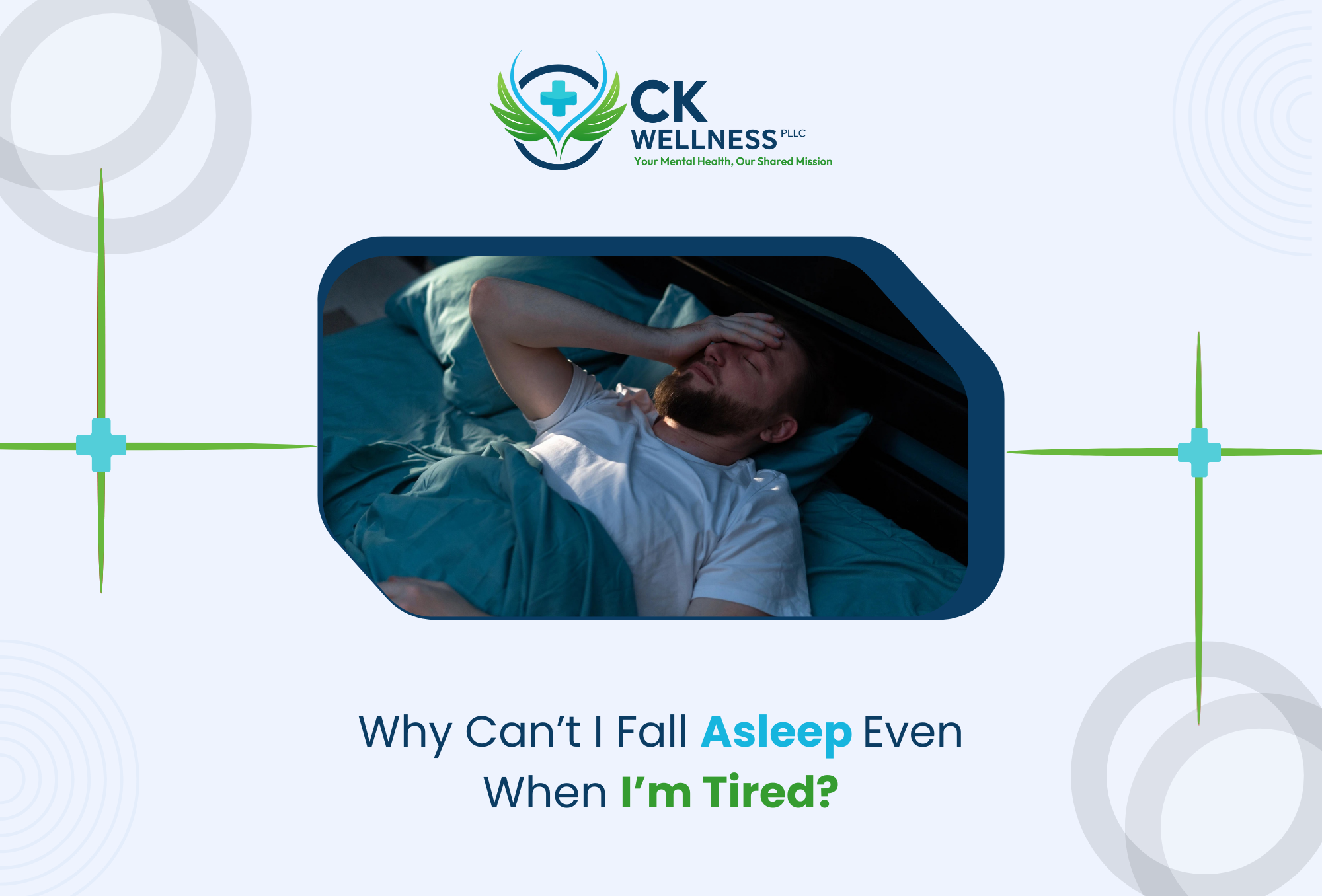
Falling asleep should be natural. When you become fatigued, your body is telling you that it requires rest.
However, sleeplessness is a problem most individuals cannot overcome even in times when they are in such need of sleep.
At CK Wellness, PLLC, we often see sleep disorders. These issues affect mental health, daily energy and overall well-being.
Knowing why this happens is the first step to finding relief and getting better sleep.
Understanding Sleep and Its Importance
Sleep is not just resting. It is the time when your body and brain regain strength.
When you sleep:
- Your brain learns
- Your mood improves
- Your body stays healthy
Grown-ups need about 7 to 9 hours of sleep each night.
Children and adolescents require additional sleep as they are still developing.
If you do not sleep well, you may:
- Feel tired
- Have trouble paying attention
- Feel grumpy or sad
Your body has a special clock inside it. This is called your “body clock.” It sets your sleep schedule.
A mixed-up body clock makes it hard to fall asleep, even when you’re tired.
Common Reasons You Can’t Fall Asleep
- Stress and Anxiety
Stress triggers the release of cortisol, a hormone that keeps you awake. This makes it hard to relax and can prevent sleep, especially for those with anxiety disorders.
- Poor Sleep Environment
Your bedroom is not as insignificant as you believe. The things that may interfere with your sleep include:
- Noise
- Light
- Temperature
- Uncomfortable bedding
These keep your mind active even when you’re tired.
- Irregular Sleep Schedule
When you go to sleep at different times every night, your body becomes confused. Your body prefers a routine.
- Over-simulation at Night
Melatonin production can be disrupted by exposure to screens, bright lights or vigorous mental activity before sleep. Melatonin is the hormone that signals the onset of sleep. Activities that will mislead your brain into believing that it is still daytime include:
- Working on a computer
- Scrolling on your phone
- Watching TV
These may postpone your sleep.
- Caffeine, Alcohol, and Drugs
Some of these substances may make you stay awake. These include:
- Caffeine
- Alcohol
- Some medications
Consuming caffeine or alcohol before bed can disrupt your sleep.
6. Medical and Psychiatric Conditions
Sleep can be difficult due to some health issues. These are pain, worry, sadness or difficulty breathing at night.
Physiological Factors That Keep You Awake
Your body relies on a balance of chemicals and hormones to regulate sleep:
- Melatonin: Signals the body that it is time to sleep.
- Cortisol: High levels at night interfere with sleep.
- Adenosine: Builds during wakefulness to induce sleep pressure.
If these systems are out of balance, even extreme tiredness may not lead to sleep. For instance, stress keeps cortisol high, which can block melatonin’s effects.
Psychological Factors That Contribute to Insomnia
Cognitive functions serve a vital purpose in sleep:
- Overthinking
Ruminating on things that happened daily or worrying is what keeps the mind active.
- Conditioned arousal
•Spending time awake in bed trains your brain to link bed with being awake, not resting.
- Fear of sleeplessness
Concern about insomnia produces a process of worrying that exacerbates insomnia.
Ways to Improve Sleep
If you have trouble falling asleep, you can help your body rest better. Here are tips to make sleeping easier:
- Wake up and go to sleep at the same time every day, including weekends.
- Use a warm bath, book, or soothing music to start a bedtime routine.
- The bed should be used to sleep and rest. Avoid working or watching television in bed.
- Set up a calm, dark, and quiet bed. Use comfy pillows and blankets.
- Avoid alcohol before bed. It can divide sleep into portions.
When to Seek Professional Help
Trouble falling asleep can indicate a sleep disorder. It suggests a mental health problem. At CK Wellness, PLLC, we specialize in diagnosing and treating:
- Insomnia
- Sleep apnea
- Restless leg syndrome
- Circadian rhythm disorders
We provide an individualized treatment plan that involves psychiatric care, behavioral therapy and lifestyle counseling. An immediate response can help bring back regular sleep patterns. It can also boost mood and increase daytime activity.
Conclusion
It is common to feel tired but not fall asleep. Stress, habits, or health problems can cause this.
The good news is that sleep problems can be treated. With the right support and positive routines, you can enjoy restful sleep once more.
CK Wellness, PLLC, is here to guide you on the journey to better sleep and a healthier life. Contact us, you deserve nights filled with restful sleep and days full of energy and focus.
FAQs
Can sleep disorders affect my health?
Sleep deprivation harms your heart, immune system, mood and memory. Treat sleep issues early for better health.
How important is a bedtime routine?
Very important. Having a regular bedtime schedule will give your body a signal when it is time to rest and will also give your mind time to get ready to fall asleep.