
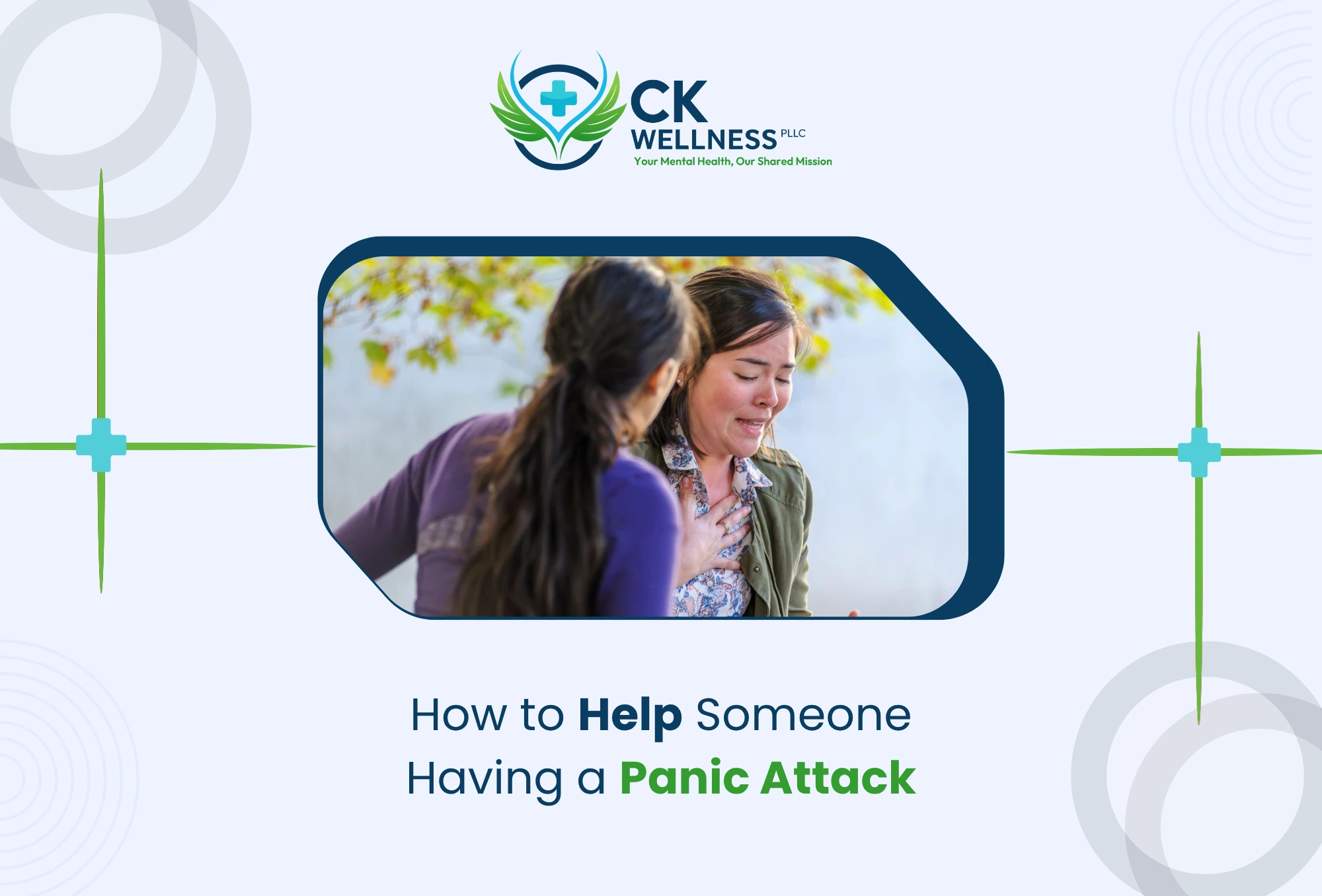
A panic attack can feel very scary. It is scary for the person and also for the one who is helping. The good news is that you do not require special training. A calm voice, a kind face and simple words can make a big difference.
If someone you care about is having a panic attack, your job is not to fix everything. It is your task to keep them safe until that moment. It matters a lot.
At CK Wellness, PLLC, we support people who live with anxiety, panic attacks, social anxiety, generalized anxiety disorder and phobias. We understand how real and overwhelming these moments can be.
Below, you will learn how to help someone having a panic attack in a calm and caring way.
Signs Someone Is Having a Panic Attack
It is good to know what to look for. A person may:
- Breathe very fast
- Hold their chest
- Feel dizzy or weak
- Sweat or shake
- Say they feel like they are dying
- Want to leave quickly
These symptoms may take a few minutes or longer. Knowing these signs helps us move swiftly and cautiously.
How to Help Someone Having a Panic Attack
Stay Calm and Be Present
It is an initial action that is strong but easy. Stay calm. Your calm energy helps the other person feel safe. If you panic, they may feel worse.
Stand or sit near them. Speak low, deep voice. Make them realize they are not alone. You can say:
- “I am here with you.”
- “You are safe.”
- “This will pass.”
These words bring comfort and help lower fear.
Help them Focus on Breathing
Breathing is very important. Fast breathing can make panic worse.
Help them slow down their breath:
- Breathe in through the nose
- Count to four
- Hold for a moment
- Breathe out through the mouth
Do this together. You can count out loud. Slow breathing helps the body calm down.
Use Grounding Techniques
Grounding helps the mind come back to the present.
Try this:
- Name 5 things they can see
- Name 4 things they can feel
- Name 3 things they can hear
- Name 2 things they can smell
- Name 1 thing they can taste
You can guide them through each step. Speak slowly and give them time to answer.
This process aids the brain in concentrating on real things. It can reduce panic and introduce control.
Avoid Saying the Wrong Things
Words matter a lot in this moment. Avoid saying:
- “Calm down.”
- “You are overreacting.”
- “Just relax.”
These words may make them feel worse. Instead, use kind and simple language. Speak with care and patience.
Give Them Space If Needed
Some people want space during a panic attack. Others want someone close. Ask gently:
“Do you want me to stay here or give you space?”
Respect their answer. This shows care and understanding.
Stay With Them Until They Feel Better
The person might feel unsteady, sleepy, or confused after the panic attack passes.
Hang around for some time.
You can:
- Offer water
- Encourage them to sit
- Encourage rest
Let them know you’re there while their body calms down.
Create A Safe Environment
A calm space can help reduce panic. If possible:
- Move to a quiet area
- Reduce noise and bright lights
- Remove crowds
A peaceful setting helps the body settle down faster.
Teach Simple Coping Tools
Helping someone learn tools can prepare them for the future. Some helpful tools include:
- Deep breathing
- Positive self-talk
- Gentle movement like walking
- Listening to calming sounds
We guide patients to build these skills over time. Practice makes these tools stronger.
Understand That Panic Attacks Are Real
The brain sends signals that something is wrong, even if the danger is not real. The body reacts fast. This is not something the person can control easily.
At CK Wellness, PLLC, we treat panic attacks with care because they can affect daily life. Work, relationships and peace of mind can all suffer.
Understanding this supports you in engaging with care rather than anger.
Support Without Judgment
Never judge or blame the person. Panic attacks are not a choice. They are part of how the body reacts to stress.
Show kindness. Listen. Be patient. This builds trust and comfort.
Encourage Professional Support
If panic attacks happen often, it is important to seek help. At CK Wellness, PLLC, we provide expert psychiatric care with compassion and respect.
Our team is led by Dr. Krishnaswamy Gajaraj, MD, MBBS, DPM and Shirnett Khorran-Gajaraj, MPH, MSN, PMHNP-BC. We focus on personalized care for each individual.
Our care includes:
- Careful evaluation
- Medication if needed
- Therapy support
- Ongoing follow-up
We help people build a life with less fear and more peace.
When To Seek Immediate Help
Most panic attacks pass on their own. But seek help if:
- The person faints
- They have chest pain that does not stop
- They cannot breathe at all
- It is their first panic attack
Safety always comes first.
Final Thoughts
Helping someone during a panic attack is about being calm, gentle and supportive. Techniques such as breathing, grounding and encouraging words can help.
CK Wellness, PLLC, is here to help you with each step towards improved mental wellness.
If you or a loved one is suffering from panic attacks, don’t wait.
Contact CK Wellness, PLLC today. We can help you gain peace, balance and control.
FAQs
Can a panic attack harm you?
Panic attacks can be frightening, but it’s not dangerous. It will fade away.
Can I hug them to help?
Ask first. Some people may want a hand to hold. Other people may prefer not to be held.
How long will a panic attack last?
Panic attacks usually last between 2 and 30 minutes. The feeling will slowly fade.