
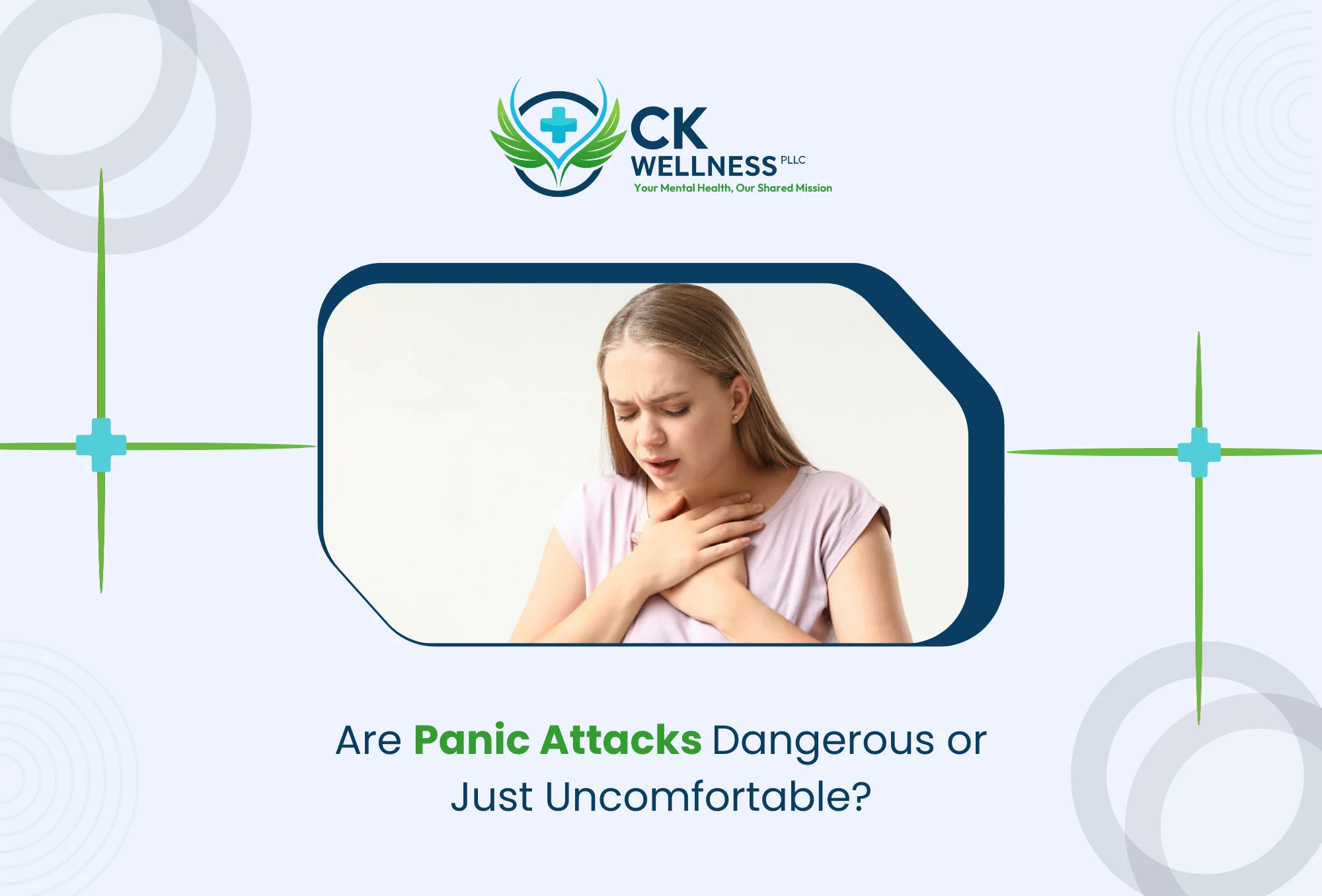
Have you ever felt your heart pounding so hard it scared you?
Your chest is tight. Your hands are shaking. Your breath is disappearing. And one terrifying thought:
“Am I dying?”
If you’ve had a panic attack, you know it doesn’t feel like “just stress.” It feels real. Urgent. Dangerous.
So, let’s talk honestly about it.
Are panic attacks actually dangerous or just incredibly uncomfortable?
What Is a Panic Attack?
A panic attack happens when your brain mistakenly signals that you’re in danger. This activates the body’s fight-or-flight response, releasing adrenaline and stress hormones.
That sudden surge causes physical symptoms such as:
- Rapid heartbeat
- Shortness of breath
- Sweating or shaking
- Dizziness
- Chest tightness
- Intense fear or dread
Although the sensations feel serious, your body isn’t in real danger. It’s simply reacting to a false alarm.
Most attacks peak within 10–20 minutes and then gradually fade.
At CK Wellness, PLLC, we help people understand these sensations so they know what’s happening and why it feels so real.
Why Do Panic Attacks Happen?
Panic attacks are closely associated with both anxiety and stress. Triggers vary from person to person and may include:
- Chronic stress
- Lack of sleep
- Caffeine
- Major life changes
- Medical conditions
- Genetics
- Panic disorder
In some cases, there is no apparent cause of the attacks, which can make them even more frightening. By being anxious about attacks in the future, one can worry more and predispose oneself to new attacks
Our team at CK Wellness, PLLC, teaches coping strategies that help break this cycle, giving people back a sense of control.
Can Panic Attacks Cause Death?
The short answer: No.
Panic attacks are uncomfortable, but they do not cause death. Your body undergoes a strong fight-or-flight response, but it is temporary.
However, panic attacks can become indirectly dangerous if they cause:
- Panic attacks while driving or operating machinery
- Avoiding leaving home or skipping work or school
- Avoiding social situations and creating a cycle of fear
Ignoring panic attacks can also affect your health, as your heart rate rises, your breathing quickens, and your muscles tense. That’s why getting help is essential.
At CK Wellness, PLLC, we focus on preventing these patterns so you can live fully, without fear, controlling your life.
Panic Attack and Heart Rate
So, why does your heart race? During panic, adrenaline tells your heart:
“Pump faster, we’re in danger!”
Your heart may beat 120–160 times per minute.
It feels scary. But for most healthy people, this is not dangerous. Your heart is strong and can handle a temporary speed-up.
Heart Attack Symptoms vs Panic Attack: How to Tell the Difference
Because symptoms overlap, many people confuse the two.
Heart attack symptoms often include:
- Crushing chest pressure
- Pain spreading to the jaw or arm
- Nausea
- Cold sweats
Panic attack symptoms often include:
- Sudden fear
- Tingling
- Hyperventilation
- Feeling detached
If you’re ever unsure, it’s always safe to seek medical attention.
What You Can Do During a Panic Attack
There are simple ways to cope when a panic attack starts:
- Breathe slowly
Breathe deeply and count to four to calm your body.
- Stay in the moment
Focus on your senses to calm your mind.
- Remind yourself it will pass
Panic attacks usually peak quickly and then fade. Knowing this can reduce fear.
- Move your body
Walking or stretching can help release tension.
These strategies work best when combined with professional support. At CK Wellness, PLLC, we help people practice these skills safely and effectively.
It is normal to focus on the feeling after panic attack. Various post-anxiety attack effects can be felt, including being wiped out or in a foggy state of mind.
When to Seek Help
Seek professional help when panic attacks are:
- Frequent or unpredictable
- Disrupting work or relationships.
- Making you not go to places or do things.
- Affecting your mood or sleep
Attacks can be minimized and even stopped by treatment.
Treatment and Support
If panic attacks happen often, it may be a sign of panic disorder. The good news is that panic disorder is treatable.
At CK Wellness, PLLC, our providers help people manage panic attacks and anxiety. We focus on:
- Understanding your triggers
- Building coping skills
- Restoring confidence and calm
Dr. Krishnaswamy Gajaraj and Shirnett Khorran-Gajaraj offer personalized, compassionate care. With the proper support, most people see significant improvement.
Everyday Tips to Prevent Panic Attacks
You can reduce attacks in daily life by:
- Limiting caffeine and sugar
- Getting enough sleep
- Practicing mindfulness or meditation
- Exercising regularly
- Sharing your concerns rather than holding them within
Conclusion
Panic attacks are painful and severe, though not very dangerous. Panic attacks are an extreme reaction to stress, but they will not permanently harm your body. You can manage them with knowledge, coping strategies and professional support.
Our mission at CK Wellness, PLLC is to help people achieve emotional balance, reduce anxiety and lead a whole life.
Get in touch, we can help you and you do not have to face panic attacks alone.
FAQs
Can panic attacks cause headaches?
Yes, due to muscle tension and stress hormones.
Is crying during panic attack normal?
Yes, it’s a natural emotional release.