
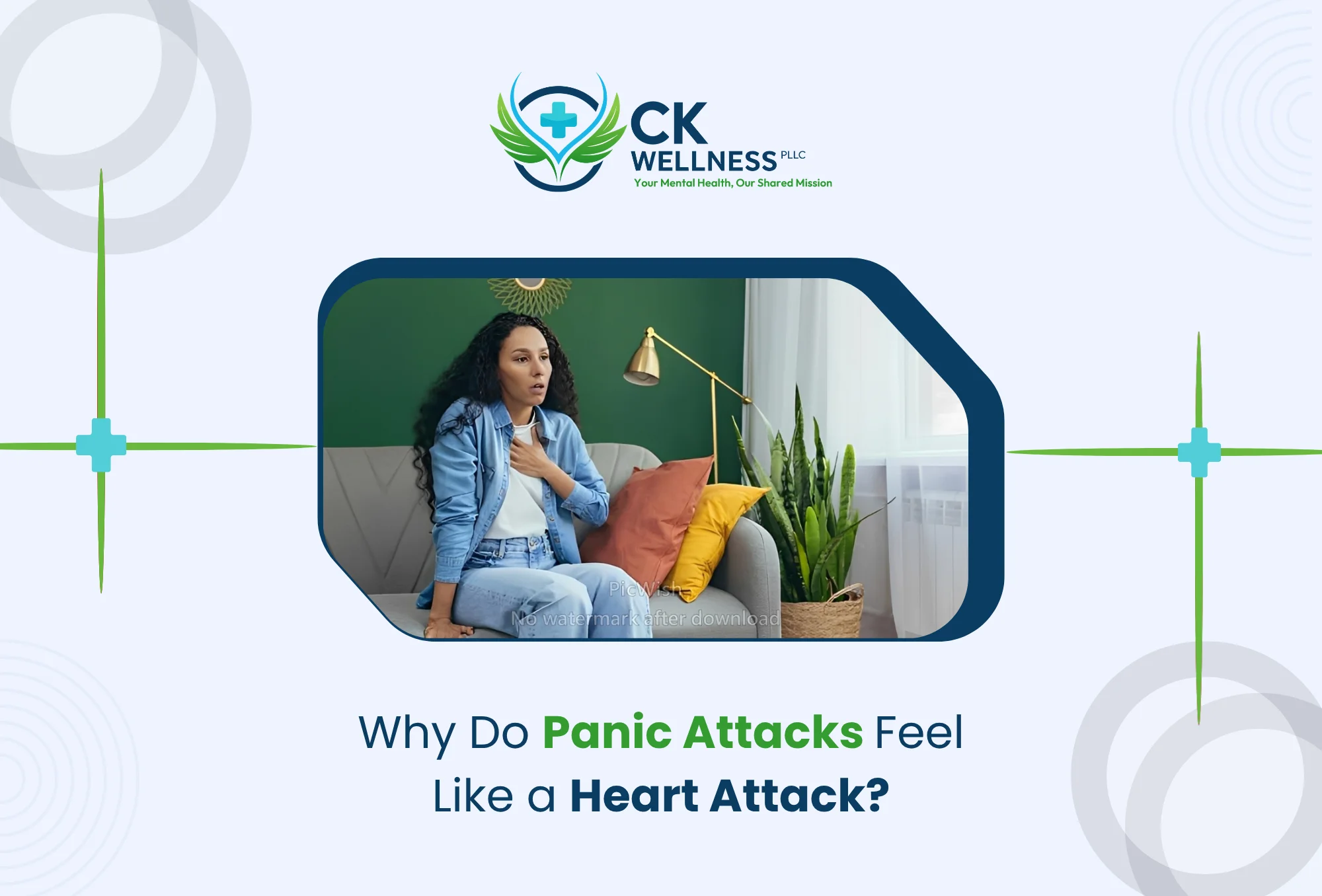
Your heart beats very fast. Your chest hurts. You cannot catch your breath. You feel dizzy. You think, “This is it. I am having a heart attack.”
But what if it is not a heart attack? What if it is a panic attack?
Many people feel this way. They go to the hospital. The doctors check their heart and say, “Your heart is fine. You had a panic attack.” It can be very confusing.
At CK Wellness, PLLC, we assist you in understanding your thoughts, emotions and physical responses to promote a sense of calm.
So, why do panic attacks feel like a heart attack? Let’s learn more.
What Is a Panic Attack?
A panic attack is a sudden, intense fear that can occur anytime, while watching TV, playing outside, or even sleeping.
During a panic attack, your body goes on alert. You may experience:
- A racing heart
- Fast breathing
- Tightened muscles
- Shaking or sweating
This is the “fight or flight” response, meant to protect you, but it can trigger without real danger.
Panic attacks escalate rapidly and then diminish. They don’t cause harm, but can be quite distressing.
What Is a Heart Attack?
A heart attack is a serious problem.
It happens when a blood vessel is blocked, preventing oxygen-rich blood from reaching the heart. This can damage the heart muscle.
Symptoms include:
- Chest pain
- Sweating
- Difficulty breathing
Immediate medical help is essential.
Why Do Panic Attacks Feel Like a Heart Attack?
Panic attacks and heart attacks can feel very similar because they share many of the same physical symptoms.
Both may cause:
- Chest discomfort or pain
- A rapid heartbeat
- Shortness of breath
- Dizziness or weakness
- A feeling that something terrible is about to happen
When your chest hurts and your heart races, you might think it’s a heart issue. We are often taught to recognize chest pain as a warning sign of a heart attack.
So, when anxiety creates similar sensations, your mind may immediately assume the worst.
The difference is that during a panic attack, these symptoms are caused by your body’s alarm system, not by damage to your heart.
However, the fear itself can make symptoms stronger. You may think:
“Something is wrong.”
That fear raises your stress response and makes your heart faster and your breathing change. Those sensations generate further fear and can result in a vicious cycle that can become impossible to escape.
Key Differences Between Panic and Heart Attacks
While the symptoms overlap, panic attacks and heart attacks have distinct differences:
- How It Starts
A panic attack can happen suddenly. It can be caused by stress, fear, or sometimes even by no reason. It can occur while you’re lying down, even while you’re sleeping.
A heart attack often happens during physical activity. It may also occur during rest but generally starts during a routine activity such as climbing stairs.
- Type of Pain
Panic pain can be sudden and localized. A heart attack causes most of the pain to feel like heavy pressure or squeezing across the chest.
- Spread of Pain
The pain from a heart attack may radiate to the left arm, jaw, neck, or back. Panic attack pain is usually constricted to the chest area.
- Timing
Panic attacks reach their peak 10 minutes to 15 minutes after beginning and then fade. Heart attack symptoms often persist or worsen over time.
Don’t diagnose yourself with chest pain. If these chest pains occur for the first time, or if you are unsure, get emergency medical attention.
How to Calm Your Body During a Panic Attack
When a panic attack starts, remember that it will end. It feels bad, but it will not last forever.
Try these steps:
Breathe slowly. Breathe in through your nose and out through your mouth.
Look around and name:
- Five things you can see
- Four things you can touch
- Three things you can hear
- Two things you can smell
- One thing you can taste
This exercise helps your mind focus on the present moment instead of fear.
Getting Long-Term Support
For some people, panic attacks do not go away on their own. They may need help learning why they happen and how to manage them.
A type of therapy called Cognitive Behavioral Therapy (CBT) can help. It teaches you how your thoughts, feelings and actions connect. It helps you learn better ways to handle fear and stress.
At CK Wellness, PLLC, we provide evaluations, treatment plans, medication support, therapy support, and telehealth services. Led by Dr. K. Gajaraj and Shirnett Khorran-Gajaraj, PMHNP-BC, the team helps people manage anxiety and improve their daily lives.
With excellent resources like medication, therapy and telehealth services, CK Wellness, PLLC can help you get grounded, find peace, and get back on track.
When to See a Doctor Right Away
Get help immediately if:
- Chest pain persists or worsens
- You feel nauseous
- Pain spreads to your arm or jaw
If your doctor says your heart is fine, find your triggers. Then, practice calming techniques. Also, talk to professionals for long-term help with panic attacks.
Final Thoughts
Panic attacks mimic heart attacks with intense physical symptoms like rapid heartbeat and chest pain, but they don’t harm your heart. Heart attacks require immediate medical attention.
If you’re uncertain about your symptoms, consult a doctor.
For those struggling with panic attacks, support is available. CK Wellness, PLLC provides a safe space to discuss fears and find calm.
Contact us to learn about our services or to book an appointment.
FAQs
Can breathing exercises stop a panic attack?
Yes, they can calm the nervous system and reduce symptoms, especially with regular practice.
Should I see a doctor for panic attacks?
Yes, a doctor can rule out other issues and offer safe management strategies.