
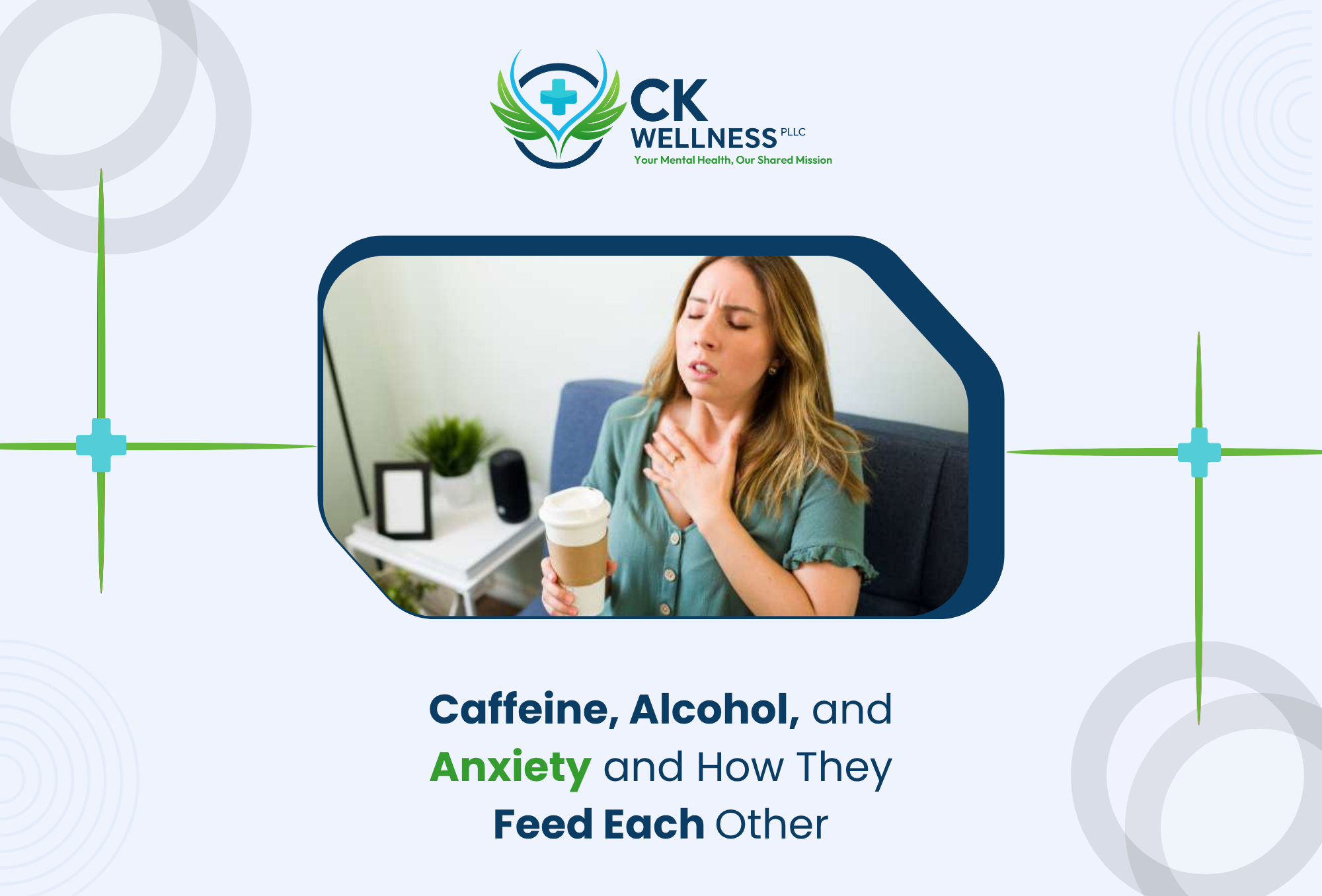
The use of caffeine and alcohol has been shown to be able to cause an increase in your level of anxiety.
Caffeine is known to produce symptoms such as jitteriness, racing heartbeats, and poor sleep patterns; whereas, alcohol can provide some initial relief from these effects but ultimately results in higher levels of anxiety.
This combination can result in a cycle where you require more caffeine to help get you through a difficult day and more alcohol to relax. To end this cycle, try to cut down on both gradually.
- You sleep badly, so you load up on coffee
- By mid-afternoon your heart is racing
- By evening you want a drink to calm down
- The drink makes the night restless
- The next morning you reach for more coffee
Neither habit feels like a big deal on its own!
But together, they can keep anxiety humming in the background.
Let’s take them one at a time and then see how they connect.
Can Caffeine Cause Anxiety?
Yes, it can.
Here’s what’s going on:
- Caffeine blocks adenosine, a chemical that helps your body feel tired
- It also raises dopamine, noradrenaline, and glutamate
- That lifts your heart rate and blood pressure
- A small amount can sharpen your focus
- A larger amount can bring on anxiety symptoms
The FDA says too much caffeine can cause:
- A faster heart rate
- Heart palpitations
- High blood pressure
- Sleep disruption
- Anxiety and jitteriness
- Upset stomach and nausea
- Headache
A lot of that looks like a panic attack.
So caffeine can be mistaken for an anxiety problem, or set one off.
The DSM-5 even includes caffeine-induced anxiety disorder.
That’s when caffeine directly causes anxiety symptoms that get in the way of daily life.
How much caffeine is too much?
- The FDA cites 400 mg a day as an amount not generally linked to negative effects in healthy adults
- That’s about two to three 12-ounce cups of regular brewed coffee
- Each cup can hold roughly 113 to 247 mg
But 400 mg isn’t a magic line.
- Genetic studies link adenosine receptor genes to anxiety
- Some people may react to far less
- If you already live with anxiety, you might feel it well under 400 mg
Caffeine also hides in places people forget:
- Regular coffee runs about 4 to 21 mg per fluid ounce
- Energy shots run about 40 to 70 mg per fluid ounce
- Reading labels really does matter
Can Alcohol Make Anxiety Worse?
It can.
Many people drink to relax, and for a short while it may work.
The trouble comes later:
- Alcohol disrupts sleep
- Many people feel nervous, dreadful, or racy the day after drinking
- Some call it “hangxiety”
The bigger problem is the pattern.
Using alcohol to manage anxiety is called self-medicating.
How Do Caffeine and Alcohol Feed Each Other?
Think of it as a loop:
- Anxiety and poor sleep leave you tired and on edge
- You use caffeine to get through the day
- Too much caffeine brings jitters, a racing heart, and a mind that won’t slow down
- You use alcohol to come down
- Sleep gets worse, anxiety rises the next day, and the cycle starts again
Each substance treats a problem the other helped create.
That’s why the loop is so hard to spot from the inside.
Every step feels like a sensible fix for the one before it.
| Category | Caffeine | Alcohol |
| Why people use it | To wake up and focus | To unwind and quiet worry |
| What it can do to anxiety | Racing heart, jitters, restlessness | Can ease nerves briefly, then raise anxiety later |
| Effect on sleep | Can make it hard to fall or stay asleep | Can break up sleep |
| What it can push you toward | Alcohol, to settle down | Caffeine, to recover |
| Cutting back | Headache, fatigue, irritability | Can be risky to stop suddenly if you drink heavily |
Pay attention to that last row.
If you drink heavily and regularly, don’t stop suddenly on your own.
Alcohol withdrawal can be dangerous.
Talk with a medical provider first.
Is It Anxiety, or Is It Caffeine or Alcohol?
Often it’s a bit of both.
- The NIMH estimates 31.1% of U.S. adults will have an anxiety disorder at some point.
- About 85% of the U.S. population drinks at least one caffeinated beverage a day.
- So plenty of people with anxiety also drink caffeine, and many drink alcohol too.
Sorting out the causes usually takes a professional.
A good evaluation looks at:
- Your symptoms
- Your sleep
- Your caffeine and alcohol habits
- Your family history
- Your medications
Treating anxiety without looking at what you drink can miss part of the picture.
Looking at what you drink without treating the anxiety can leave you with nothing to replace it.
How Can I Break the Cycle?
Small, steady changes beat a dramatic overhaul.
Start with caffeine
- Cut back slowly – maybe one fewer cup every few days.
- Quitting cold can cause headache, fatigue, irritability, drowsiness, trouble concentrating and nausea
- Keep caffeine in the morning and early afternoon
- Check labels on energy drinks, pre-workout powders and sodas
- Swap some cups for decaf, tea, herbal tea, or water
Look at your drinking
- Notice when you drink and why
- Ask yourself if it’s a celebration or a way to switch off your thoughts
- Try a few alcohol-free evenings and see how your sleep and anxiety feel
- If cutting back is hard, or you drink more than you meant to, that’s useful information
- It’s not a personal failing
Find other ways to calm down
- Take a walk after work
- Try slow breathing or a short mindfulness exercise
- Keep a regular bedtime
- Spend time with someone who helps you relax
Don’t go it alone
- A provider can help you work out what’s driving what
- Then you can build one plan that treats all of it together
When Should I Get Help?
Reach out if:
- Anxiety, panic or racing thoughts show up most days
- You rely on alcohol to calm down or fall asleep
- You’ve tried to cut back on caffeine or alcohol and couldn’t
- Your sleep, work or relationships are suffering a lot
- You feel hopeless or just out of control
FAQ
How much caffeine is too much if I have anxiety?
People with anxiety may be sensitive to much less. Notice how you feel, and talk with your provider!
Is it safe to quit caffeine suddenly?
- For most people it isn’t dangerous.
- It can cause headaches, fatigue and irritability.
- Cutting back gradually is easier.
Is it safe to stop drinking suddenly?
Not always.
If you consume alcohol on a daily basis and/or in large amounts, abruptly ceasing consumption can lead to serious withdrawal.
Talk with a medical provider first.
Talk to Someone
You don’t have to untangle this by yourself.
At CK Wellness, Dr. Krishnaswamy Gajaraj and Dr. Shirnett Khorran-Gajaraj, DNP, PMHNP-BC, offer warm, personalized care.
- We treat anxiety and panic disorders.
- We also treat alcohol use.
- Visit us in Hingham or meet by telehealth.
- Scheduling is flexible, including early morning, evening, and weekend appointments.
- We accept many major insurance plans.
Get started:
- Book an appointment: ckwellnessllc.com/contact-us
- Call: (781) 773-2773
- Email: CKwellness3@gmail.com
- Visit: 99 Derby Street, Suite 200, Hingham, MA 02043
Want to keep reading? Browse our services, meet the team, or see more from our blog.
This article is for education only and isn’t a substitute for professional medical advice, diagnosis, or treatment.
Sources
- U.S. Food and Drug Administration. Spilling the Beans: How Much Caffeine Is Too Much?
- Martin, K. (reviewed by Washington, N., DO, MPH). Anxiety and caffeine. Medical News Today, 2021.
- Nordqvist, C. Self-medication and anxiety/substance use disorders, reporting Robinson et al.. Medical News Today, 2011. Original study: Robinson, J., et al., Archives of General Psychiatry, University of Manitoba.