
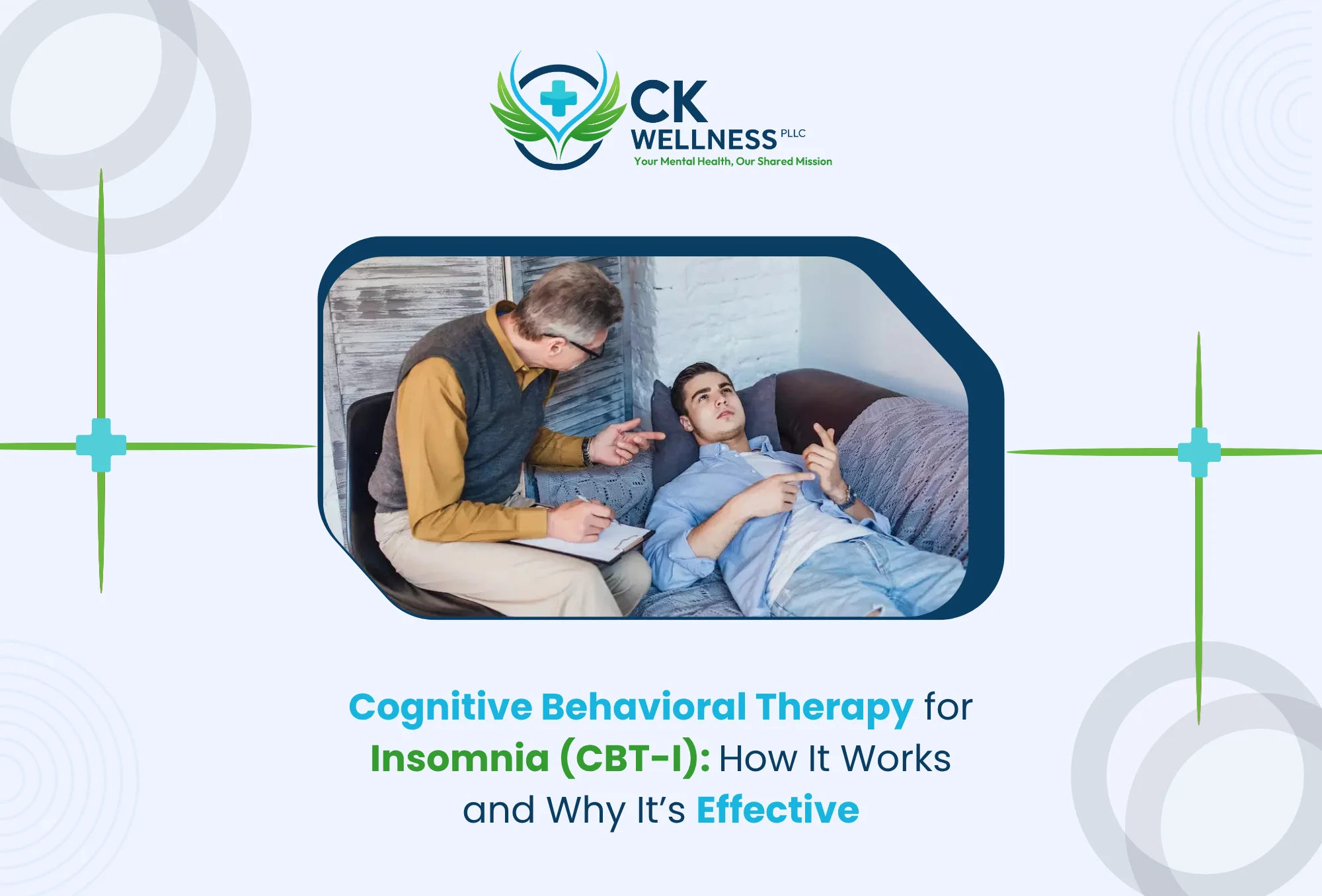
Have you ever found yourself lying in bed, looking up at the ceiling, not sleeping, because, as the clock struck later on, your mind had other plans? If you are one of the many people who are plagued with sleepless nights, you don’t have to be the only one. Chronic insomnia affects millions of adults, and while it renders you exhausted in just one place, it can impact your relationships, mood, health, focus, work performance, and more.
Many of our clients who come to CK Wellness LLCcomplain of being stuck in a vicious cycle of poor sleep at night and feeling sleepy all day. This is the reason for presenting this guide on an evidence-based therapy called Cognitive Behavioral Therapy for Insomnia (CBT-I), a highly effective and natural approach for many who aim to enhance their sleep without depending only on long-term treatment.
You’ll find out in this guide: What is CBT-I, how does it work, the key techniques of CBT-I treatment, why CBT-I is one of the most effective treatments for chronic insomnia, who might benefit from insomnia therapy, and how to begin with the help of a professional.
Understanding Chronic Insomnia Beyond “Just Trouble Sleeping”
We all get a bad night’s sleep now and then. Chronic insomnia is quite another situation. It’s when you have trouble falling or staying asleep, or getting a restful sleep, at least three nights a week for at least three months, even when you have the time and opportunity to sleep.
Some other factors may sustain insomnia, such as:
- Racing thoughts at night
- Irregular sleep schedules
- Frequently worried about sleeping.
- Using your bed for work, scrolling, or stress
- Any form of mental disorder or illness, including Anxiety Disorder, depression, Post Traumatic Stress Disorder (PTSD), or Attention Deficit Hyperactivity Disorder (ADHD)
- Stressful life events and burnout
Tips for sleeping more easily, such as drinking herbal tea or keeping your bedroom cool, may work temporarily. Still, they do not help with the underlying thought patterns and behaviors that lead to insomnia. CBT-I therapy can help make an impact here.
What Is Cognitive Behavioral Therapy for Insomnia (CBT-I)?
Cognitive Behavioral Therapy for Insomnia (CBT-I) is a brief, structured form of therapy that focuses specifically on the sleep field and targets behaviors, thought patterns, and habits associated with insomnia.
CBT-I is a talk therapy for sleep problems, as opposed to general talk therapy. It uses cognitive strategies and methods of behavioral sleep medicine to reframe the brain and body, resulting in better sleep.
CBT-I is recommended as a first-line therapy for chronic insomnia by the American Academy of Sleep Medicine, which reports that it positively affects sleep quality and decreases the number of awakenings at night, and has lasting effects on sleep. Fortunately, a large number of people feel better without relying on sleep pills.
How CBT-I Works
CBT-I treats the psychological symptoms that maintain insomnia. Treatment is functional, focused, and every individual’s lifestyle and symptoms are taken into account.
Stimulus Control: Rebuilding the Bed as a Place for Sleep
Many find that the bed, over time, comes to symbolize frustration and concern, or lack of sleep, rather than sleep and rest. Stimulus Control restores the association of “Bed to Sleep.”
Common recommendations include:
- Going to bed only when you feel sleepy
- Only using the bed for sleep and intimacy
- If you don’t fall asleep after 15-20 minutes, get out of bed
- Getting up at the same time, even on the weekend
- Not taking a nap during the day
These tips will help calm your brain during bedtime, so you can make it more comfortable to fall asleep.
Sleep Restriction Therapy: Strengthening Sleep Drive
Sleep restriction therapy temporarily limits the time spent in bed to match the amount of sleep you’re actually getting more closely. This may prove difficult in the early days, but it helps sustain your sleep drive and, over time, can increase the quality of your sleep and increase its amount. This is adjusted and supervised by a trained CBT-I therapist to ensure safety and effectiveness.
Cognitive Restructuring: Changing Unhelpful Sleep Thoughts
Anxiety/ruminating thoughts can contribute to insomnia; these can include things like:
- “I’ll not sleep tonight.”
- “Tomorrow will be a disaster if I don’t sleep.”
- “There’s something wrong with me, I can’t sleep.”
Through CBT-I, these thought patterns are identified and put aside for more balanced and realistic thoughts. When sleep-related anxiety eases, more people start sleeping independently. Once people mellow with less anxiety about sleep, they can relax and fall into sleep easier. This method can be particularly beneficial for individuals suffering from insomnia, anxiety, or trauma and stress.
Relaxation Techniques and Wind-Down Routines
CBT-I often involves some soothing strategies to help prepare the body for sleep, which can consist of:
- Progressive muscle relaxation
- Guided imagery
- Slow breathing exercises
- Mindfulness-based relaxation
- Consistent bedtime routines
Such a process aids in reducing tension and stilling the overactive mind, mainly before going to bed.
Personalized Sleep Hygiene Strategies
While sleep hygiene typically alone is not sufficient to stop chronic insomnia, it is still a key element of CBT-I. CBT-I doesn’t give generic advice but instead teaches strategies to stamp out habits around:
- Evening screen exposure
- Caffeine timing
- Exercise and movement
- Light exposure
- Bedroom environment
- Sleep scheduling
The aim is to establish healthy habits that’ll help you keep your body in a natural rhythm.
Why CBT-I Is Considered One of the Most Effective Insomnia Treatments
CBT-I is effective because its focus is on the underlying issues rather than merely covering up the problem of insomnia.
Research shows that CBT-I can:
- Enhance sleep quality and the length of sleep
- Reduce nighttime awakenings
- Decreased anxiety toward sleep
- Elevate your energy and concentration in the day
- Can offer more sustained results than pharmaceutical intervention for many people
Improved sleep might also contribute to the improvement of symptoms for:
- Major Depressive Disorder
- Post-Traumatic Stress Disorder
- ADHD
- Chronic stress
- Burnout
Since CBT-I is a learned, or “lifelong,” skill, many individuals experience benefits beyond the completion of treatment.
What to Expect During CBT-I Treatment
Most CBT-I treatment programs last for 4-8 sessions.
If you are working with a trained sleep therapist, psychiatrist, psychologist, or behavioral health provider, you might:
- Maintain Sleep Diaries – record sleep patterns
- Recognize behaviors that indicate sleep problems or disturbances
- Gain insight into effective strategies for managing insomnia
- Do cognitive & behavioral exercises between sessions
- Gradually change activities over time
Treatment is a team effort, a highly individualized process, and is structured.
At CK Wellness LLC, our CBT-I treatments are personalized according to your sleep issues, employment routine, mental health background, and lifestyle. Adults may have a telehealth appointment throughout MA & Greater Boston.
Who Can Benefit from CBT-I?
CBT-I might be particularly useful for:
- For adults who experience chronic insomnia
- Older adults with sleep disturbances due to aging
- Individuals managing anxiety or depression
- People with PTSD-related sleep difficulties
- Individuals who are shift workers or work on irregular hours
- Anyone who wants to find natural solutions for their insomnia
- Those needing sleep medications for long-term use, but trying to minimize their need for them
CBT-I may be appropriate and beneficial for older adults and those with mild cognitive concerns, provided it is adapted for them.
You can find out if CBT-I could be suitable for you by talking to a qualified healthcare practitioner. A qualified healthcare professional can help determine whether CBT-I is right for your specific situation.
Common Questions About CBT-I
Is CBT-I just sleep hygiene?
No. Though sleep hygiene is incorporated, CBT-I gets much more into investigating the thoughts and behaviors that sustain insomnia.
Will I need to stop sleep medication immediately?
Not necessarily. Your clinician will help you make medication changes gradually and safely, if necessary.
How quickly does CBT-I work?
A few people feel better after a few weeks, but others feel better gradually over the full treatment program.
Is CBT-I safe for older adults?
Yes. CBT-I is widely adopted for patients in older adulthood and is a proven non-medical treatment for age-related insomnia.
Practical First Steps You Can Take Today
Here are some little tweaks that could help you catch some restful sleep if you can’t:
- Go to sleep at the same time each night and keep to the schedule
- Observe Sleep Patterns for one week
- Limit exposure to screens before going to sleep
- Develop a relaxing bedtime ritual
- Avoid lying awake in bed for long periods of time
But if insomnia is interfering with your mood and concentration or your relationships or quality of life, individuals often get more effective and enduring relief from expert assistance.
CBT-I Therapy at CK Wellness LLC
Along with a variety of mental health services, at CK Wellness LLC, we offer adult insomnia treatment in Massachusetts.
We assist with:
- Anxiety disorders
- Depression
- PTSD
- ADHD
- Sleep-related concerns
- Medication management
- Telehealth psychiatry
We know how tiring chronic insomnia can be and would work with you to build reasonable and realistic treatment plans.
Schedule a Consultation
For persistent insomnia, or when you are starting to notice it having an impact on your day-to-day living, CBT-I can help you sleep more restfully without the use of medication. At CK Wellness LLC, the caring professionals provide mental health services and CBT-I treatment that is tailored to your needs. Call us today to find out about insomnia treatment, telepsychiatry services, and complete mental healthcare in Massachusetts.
The information herein is intended for educational purposes only and should not be regarded as medical advice. Please always seek advice from a professional health educator on any medical or mental health-related issues. Individual results may vary.