
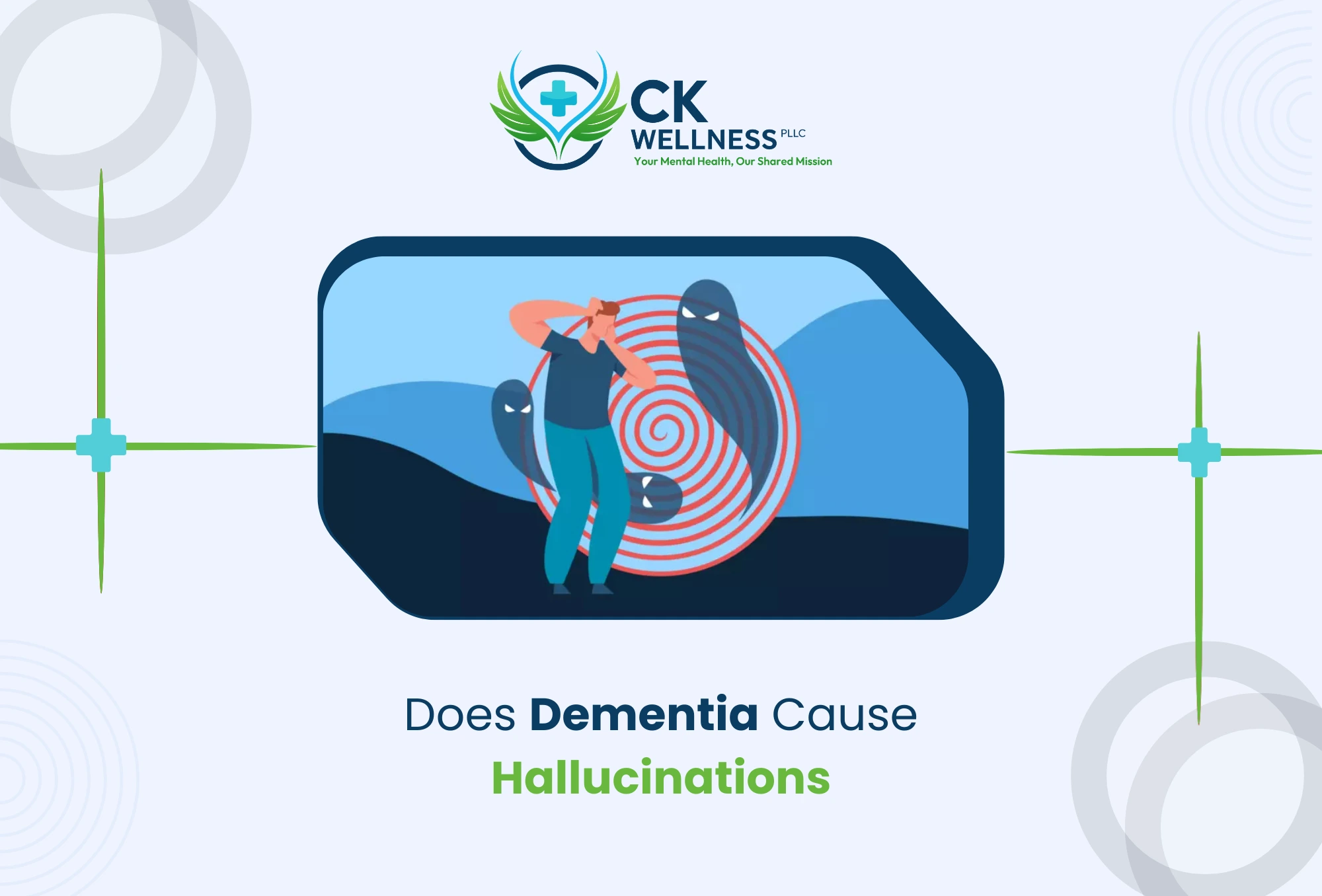
Dementia can change how a person thinks, feels and sees the world. Many families notice unusual behavior as the illness grows. Hallucinations are one of the typical and usually frightening symptoms.
A hallucination is seeing, hearing, or feeling something that does not exist. It can be confusing for the patient and their family. Many people ask a simple question: Does dementia cause hallucinations?
The short answer is yes, it can. Not everyone with dementia has hallucinations. However, some people do experience them.
We help patients and families at CK Wellness, PLLC, by providing specialized dementia treatment and geriatric care to improve their quality of life.
What Are Hallucinations?
Hallucination is a misconcept created by the brain. The person will believe that it exists, though there is nothing at all. It is not the same as a dream. Hallucinations occur when one is awake.
How Dementia Can Cause Hallucinations
Some dementia patients have hallucinations, but not all of them do.
Dementia gradually destroys some brain parts. Memory, thinking and our comprehension of what we see and hear are under the control of the brain.
When brain cells are damaged, the brain may misread information from the eyes and ears.
This can lead to hallucinations.
Several factors may increase the chance of hallucinations:
- Changes in brain cells
- Problems with memory and thinking
- Vision problems
- Sleep issues
- Medication side effects
- Stress or illness
Dementia affects people differently, causing hallucinations in some but not others.
Types of Dementia That Often Cause Hallucinations
Some types of dementia are more likely to cause hallucinations.
- Lewy Body Dementia
This form of dementia often causes early visual hallucinations.
People may see:
- Children playing in the room
- Animals walking by
- Strangers sitting nearby
These images may appear clear and detailed.
- Alzheimer’s Disease
Hallucinations normally occur in the advanced stages of Alzheimer’s disease. Since memory loss and confusion increase, the brain can form images or audible sounds that do not exist.
- Parkinson’s Disease Dementia
Some people with Parkinson’s disease later develop dementia.
Hallucinations can happen because of:
- Changes in the brain
- Medicines used to treat movement problems
What Hallucinations May Look Like
Hallucinations can look different for each person.
Common examples include:
- Seeing people who are not there
- Seeing animals or insects in the room
- Hearing someone call their name
- Talking to someone invisible
- Feeling someone sitting next to them
Sometimes, hallucinations are calm and harmless. Other times, they can be frightening or upsetting.
A person may feel scared because they believe the experience is real.
How Hallucinations Affect Daily Life
Hallucinations can make daily life harder for a person with dementia.
Some people may feel:
- Fear
- Confusion
- Anxiety
- Anger
They may struggle to trust their surroundings. Family members can also be concerned or not know what to do.
This is the reason why dementia care by professionals is relevant.
How We Help at CK Wellness, PLLC
CK Wellness, PLLC, offers dementia care that focuses on respect and kindness. Our team works with families to find what is causing hallucinations and to make a safe plan.
Dr. Krishnaswamy Gajaraj and Shirnett Khorran-Gajaraj lead our practice. We provide:
- Care for older adults with memory loss
- Careful mental health evaluation
- Medication management when needed
- Plans to keep patients safe at home
- Support and teaching for family members
- Ongoing monitoring
Ways to Help Someone Experiencing Hallucinations
When a loved one has hallucinations, the response from family members matters.
Helpful steps include:
- Stay calm and speak gently
- Do not argue about what they see
- Offer reassurance
- Turn on the lights if the room is dark
- Reduce noise and distractions
Sometimes, simple changes in the environment help reduce confusion.
When Medical Help Is Needed
Talk to a mental health provider about hallucinations.
Professional help is important if hallucinations occur:
- Happens often
- Cause fear or distress
- Lead to unsafe behavior
- Affect sleep or daily activities
A specialist can review:
- Brain health
- Current medications
- Mental health symptoms
- Possible medical causes
Treatment includes therapy, medication, or supportive care.
Final Thought
Hallucinations can feel alarming at first. However, most of the symptoms can be controlled with the help of proper medical attention and support.
Early intervention may aid in decreasing distress and enhancing the quality of life.
At CK Wellness, PLLC, we are willing to listen and develop a dementia care plan to suit your loved one.
If you want help, please get in touch with us. We will talk with you. We will make a kind plan to help your family.
FAQs
Should I correct someone who is having a hallucination?
It is usually better not to argue. The person believes what they see is real. A calm and kind response works best.
Can hallucinations start suddenly in dementia?
Yes. Medications, infections, sleep problems or illness may trigger sudden hallucinations. Always consult a doctor for sudden changes.