
Anxiety can feel like a storm inside your mind. Your heart races. Your hands shake. Your thoughts spin in circles. You may wonder, “Can I naturally calm this feeling?”
Many people ask this same question. They want something gentle. Something safe. Something simple.
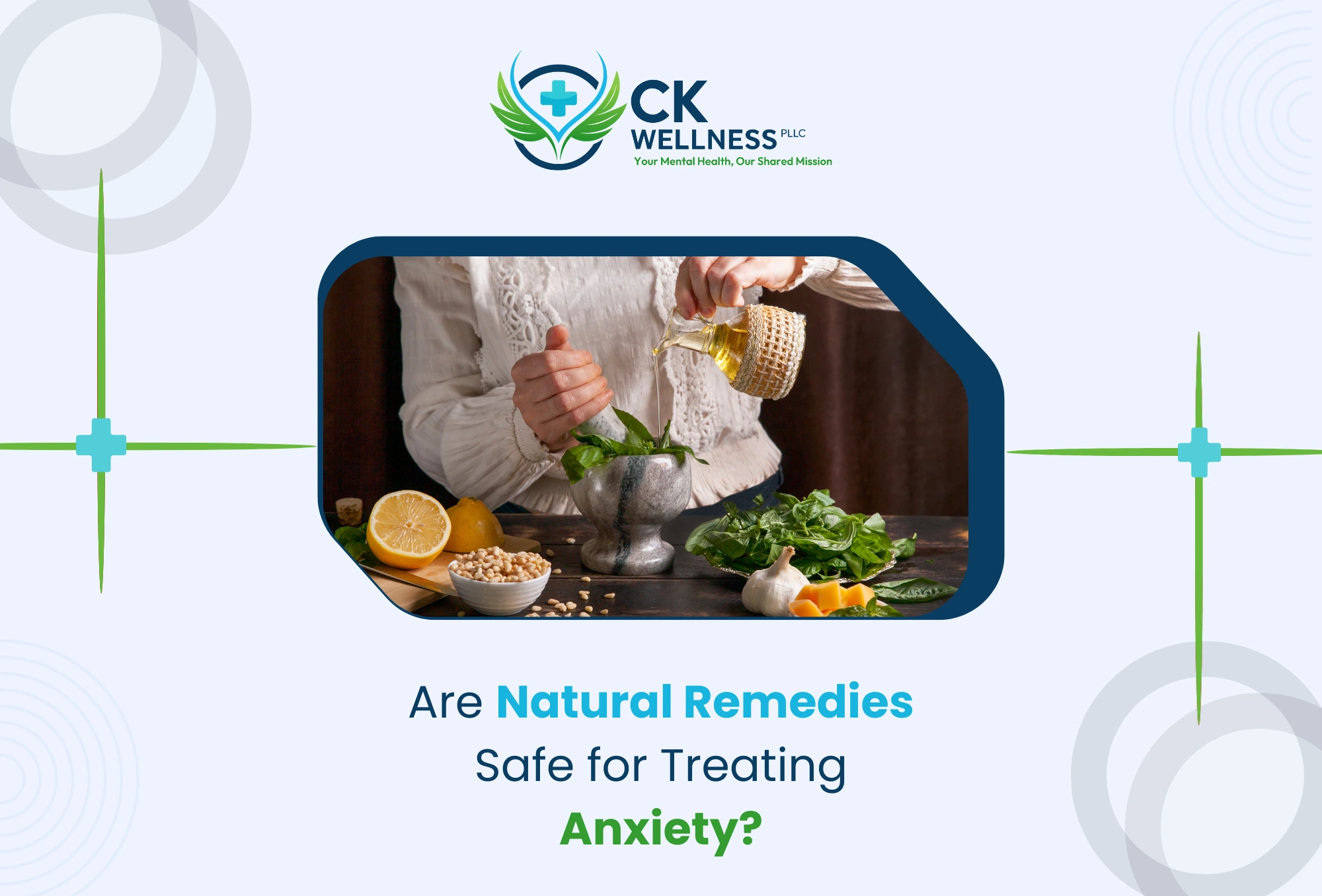
But are natural remedies safe for treating anxiety? Let’s talk about it.
Understanding Anxiety and Its Impact
Anxiety can affect the body and mind. Some people feel:
- Fast heartbeat
- Sweaty hands
- Trouble sleeping
- Upset stomach
- Worry without a clear reason
- Panic feelings
There are different kinds of anxiety. Some people feel anxious in social situations. Others have panic attacks or constant worry.
If anxiety is intense, it can make life complicated. That is why treatment is essential.
At CK Wellness, PLLC, we focus on safe, proven care.
What Are Natural Remedies for Anxiety?
Natural remedies are methods that do not start with prescription medicine. Many people try them first. These remedies often include:
- Herbal supplements
- Deep breathing
- Exercise
- Meditation
- Yoga
- Healthy diet changes
- Aromatherapy
Some people feel better with these steps. But the key question remains: Are natural remedies safe for treating anxiety?
Are Natural Remedies Safe for Treating Anxiety?
Natural remedies, including herbs that calm nerves, can sometimes be safe. But they aren’t always safe or enough for treating anxiety disorders.
For example, some people explore ashwagandha for panic attacks because it may reduce stress, but results vary. It can interact with medications or affect thyroid function.
Safety depends on:
- The specific remedy
- Dosage
- Product quality
- Medical history
- Current medications
- Severity of anxiety
Lifestyle strategies such as exercise and sleep are safe and good. Use herbal supplements with caution.
Natural substances aren’t always safe.
Herbal Supplements: Benefits and Risks
Herbs are popular for anxiety relief. Some common ones include chamomile, lavender, valerian root and ashwagandha, well-known herbs that calm nervous system responses.
- Chamomile can be used in cases of light anxiety, but the substance triggers allergic reactions.
- Lavender supports relaxation and dozing off, but applying it excessively might lead to belly discomfort.
- Valerian root can calm anxious thoughts, but may provoke headaches or disorientation.
- Ashwagandha reduces stress hormones and is not necessarily safe
Herbal supplements can interact with other drugs and vary in strength. Natural does not always mean safe.
Can Vitamins Help Anxiety?
Some nutrients linked to brain health include:
- Magnesium
- Vitamin B Complex
- Omega-3 fatty acids
A lack of some vitamins may lead to mood symptoms. These are sometimes used as over-the-counter stress relievers, but results vary by individual.
However:
- High doses of magnesium may result in diarrhea or low blood pressure
- Unusual amounts of B6 may lead to nerve damage
- Supplements can also have a reaction with drugs
Get guidance before starting any vitamins.
Lifestyle Changes: The Safest Natural Support
The safest natural approaches are daily wellness habits:
- Consistent sleep schedule
- Moderate exercise
- Balanced nutrition
- Reduced caffeine intake
- Mindfulness practices
- Time outdoors
These strategies aid mental health but don’t treat severe anxiety.
When Natural Remedies Are Not Enough
Natural options may help with mild stress. But anxiety disorders are medical conditions. They can involve changes in brain chemistry, thought patterns and behavior.
You may need professional help if:
- Worry happens most days
- Panic attacks occur
- Anxiety stops daily activities
- Sleep problems continue
Professional care can help you feel better.
Professional Anxiety Treatment: A Safer Path
At CK Wellness, PLLC, we offer professional and gentle treatment to people with anxiety problems. Our work is to ensure that every human being establishes a balance and reclaims their peace of mind.
We combine medical knowledge with patient-centered care. Every treatment plan is personalized.
We treat:
- Generalized anxiety disorder
- Panic attacks
- Social anxiety
- Specific phobias
We carefully evaluate symptoms before recommending treatment.
Each treatment plan is tailored to the individual. Some patients thrive with therapy alone. Others may need medication. A combination of treatment, medication, and healthy lifestyle changes is beneficial to many.
Anxiety prescription drugs are thoroughly tested and monitored. Our trained providers adjust doses safely and closely monitor side effects.
This approach ensures treatment is both safe and effective.
Risks of Self-Treating Anxiety
Many people deal with anxiety by themselves. They can purchase supplements online or follow social media recommendations. This can be risky.
Problems may include:
- Wrong dosage
- Poor-quality supplements
- Drug interactions
- Delayed professional care
Anxiety worsens without help.
How to Know When to Seek Help
You may need professional anxiety treatment if:
- Worry lasts more than six months
- Fear feels uncontrollable
- Panic attacks happen often
- Anxiety harms work or relationships
- You avoid normal activities
Seeking help shows strength. Proper attention can reduce anxiety.
Final Thoughts
-Some natural methods may offer small support. Light exercise and sleep can soothe the mind.
However, herbs and supplements are not necessarily safe. They are side-effect-producing and might not treat real anxiety disorders. Never hide what you attempt with your care team.
If worry is intense, please reach out for help. CK Wellness, PLLC and our team are ready to listen and guide you. We want you to feel safe, strong and hopeful again.
FAQs
What can I take over the counter for anxiety?
Magnesium, L-theanine, lavender supplements and herbal teas may help mild anxiety, but they don’t replace prescription medications.
Are there over-the-counter pills like Xanax?
No. No legal OTC drugs are available that are similar to Xanax.
Does zinc help with anxiety?
Zinc supports brain health and may help if levels are low, but it’s not a standalone treatment.
What teas are good for anxiety?
Chamomile, lemon balm, passionflower and green tea calm the mind.